Analyst Mirianashvili: Trump running out of time as Iran bargains over nuclear capability

Author
Frontnews Georgia
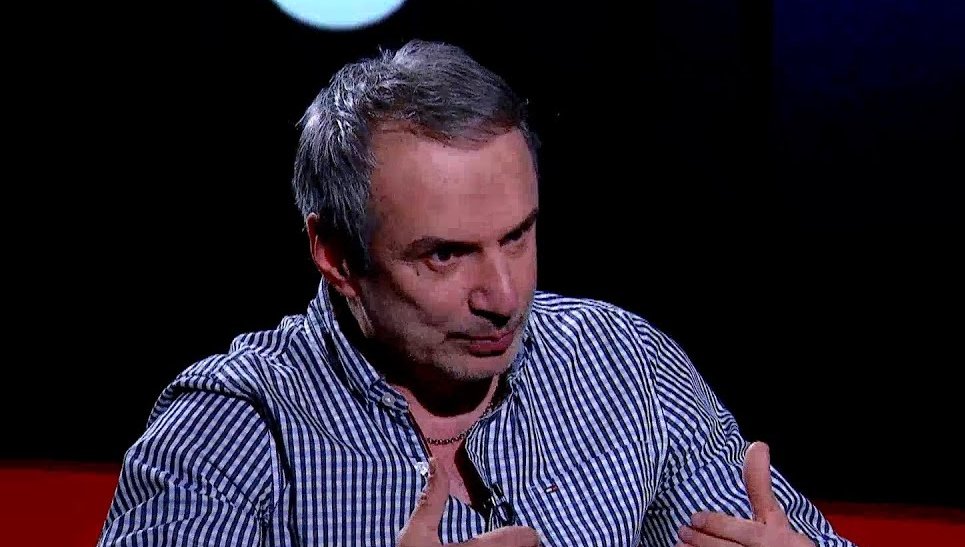
Amid rising geopolitical tensions in the Middle East and conflicting signals from the White House, the confrontation between Washington and Tehran is entering a critical phase. In an exclusive interview with Front News, foreign policy analyst Mirian Mirianashvili discussed Iran’s domestic challenges, Donald Trump’s approach to negotiations, Israel’s strategic calculations and the changing balance of power in the South Caucasus.
Q. Over the past 24 hours, Donald Trump has sent contradictory signals regarding Iran. In your view, is this Trump’s classic “Art of the Deal” strategy and an attempt to pressure Tehran, or is there a serious dispute within the White House between the military establishment and the President?
A. It is difficult to determine the level of opposition Trump faces within military circles. We simply do not have objective information about that. What I do know comes from contacts inside Iran. Iran is rapidly approaching a severe water crisis. Many dams and water-management infrastructure systems are no longer functioning properly and rehabilitation has not taken place due to financial constraints.
Iran is also facing economic problems, declining revenues and unemployment. The only sector Trump has largely avoided targeting is the energy sector, apparently with the intention of creating favorable conditions for potential American business involvement in the future.
The defence industry and automotive sector are in a particularly poor state. Several strategic bridges connecting northern and eastern regions have been destroyed and have not been rebuilt. Iran is therefore trying to avoid both war and peace, rather than signing an agreement with Trump without receiving significant benefits in return. Without incentives, it would face enormous economic challenges that it cannot solve.
If Tehran does not receive commitments on sanctions relief and access to frozen assets, such a deal makes little sense from its perspective. For Trump, however, this has become part of a negotiation process and a tool for increasing pressure on Iran.
Trump also faces his own time constraints. He has less than a month to resolve the Iran issue before shifting focus to domestic political priorities. There is likely not enough time for a large-scale conflict, which is why he is trying to persuade Iran through a combination of threats and incentives.
Q. What kind of compromise could Iran’s leadership accept and what is Trump’s ultimate red line?
A. According to information coming from inside Iran, Tehran is prepared to give up both enriched and unenriched uranium stockpiles. That half-ton of material represents years of sanctions, effort and investment aimed at reaching a point where Iran could potentially develop a nuclear weapon and negotiate with the United States and Gulf countries from a position of strength.
Iran views nuclear capability as a means of exerting leverage, particularly over the Persian Gulf. It believes it is close to achieving that objective. Iran has largely completed the enrichment process required for a nuclear weapon but lacks the technology to assemble one. With support from countries such as China, Russia, or others, acquiring that capability could become a matter of months.
As a result, Iran is not bargaining over enriched uranium itself; it is bargaining over the prospect of developing a nuclear weapon. Tehran believes this leverage should bring substantial concessions from Washington.
For years, Iran’s clerical leadership expected to possess a nuclear weapon by 2027. Given that investment, it is difficult for them to suddenly abandon those ambitions. At the same time, Trump is unwilling to offer major concessions, partly because his broader strategy is closely linked to Israel.
Q. Tehran recently announced a new defence doctrine under which attacks on proxy groups such as Hezbollah or the Houthis would be treated as attacks on Iran itself. How could this affect the regional balance of power? There have also been reports of tensions between Trump and Israeli Prime Minister Benjamin Netanyahu.
A. Personally, I do not believe there is serious tension between Trump and Netanyahu. Trump has often been criticised for his close relationship with Netanyahu, both domestically and internationally. What appears to be distance between them may simply be political theater.
On Iran, the United States and Israel are fundamentally aligned. Israel’s objective is not merely to damage Iran but to weaken the regime to the point where it can no longer restart the same cycle in the future.
Israel wants to become the dominant power in the broader Middle East. However, when rockets are being fired by Hamas or Hezbollah from nearby territories, it becomes difficult to function as a regional financial center. At the same time, Iran is not alone. It has supporters behind the scenes who are not interested in seeing Israel reach that level of regional dominance.
Q. Israel has opposed easing sanctions on Iran. If Trump agrees to partially restore Iranian oil exports, could Israel launch unilateral military action against Iranian nuclear facilities?
A. One important factor is timing. Trump faces political challenges in the United States, while Netanyahu faces elections and significant domestic political pressure. Netanyahu is also dealing with legal challenges and sees a major geopolitical victory as a path to securing his political legacy.
As for Trump, we should not assume he will simply follow Israel’s agenda. He is playing a much broader game. He also uses leverage with pro-Israel political and financial networks because he needs support for upcoming political battles at home.
Negotiations between Trump and influential groups that support Israel are taking place behind the scenes, particularly regarding political and financial backing. If Trump performs poorly politically, he could face serious consequences, including renewed discussions about impeachment.
Q. US policy proposals often discuss limiting Chinese, Russian and Iranian influence in the South Caucasus. If tensions around Iran escalate further and the Strait of Hormuz is closed, how could that affect regional transit corridors?
A. In Georgia’s case, the issue extends beyond Iran. In practical terms, the South Caucasus has already entered the American sphere of influence, although many in Georgia’s political elite do not fully recognise this.
Russia’s influence in the region has significantly weakened. The idea that Georgia can avoid provoking Russia while showing greater firmness toward the United States is no longer realistic. Irritating Washington could become a greater strategic risk than angering Moscow.
It was not Prime Minister Nikol Pashinyan who took Armenia away from Russia. In my view, it was the United States that reduced Russia’s influence there.
Tags:
Mirian Mirianashvili