Speaker Papuashvili: Namakhvani HPP history proves transparency law serves Georgian interests

Author
Frontnews Georgia
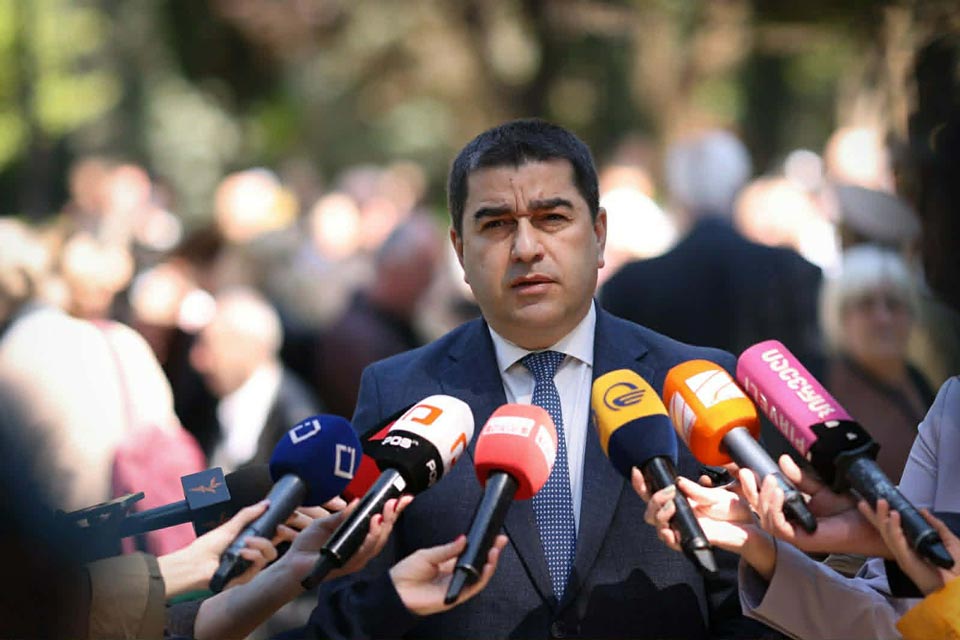
Parliament Speaker Shalva Papuashvili has cited the history of the Namakhvani Hydropower Plant project as evidence that Georgia’s transparency law serves the country’s national interests.
Speaking about the project on Friday, Papuashvili said court proceedings related to Namakhvani HPP were still ongoing and claimed there was a risk that the Georgian state could ultimately be required to pay $400 million to the company involved.
He said the project had been forced out of Georgia by “foreign-funded agents”, arguing that the country had suffered both from the failure to implement an important energy project and potentially from compensation that could have to be paid from the state budget.
“We were reminded of the Namakhvani HPP issue in recent days, where court proceedings are still ongoing. However, there is a risk that Georgia’s budget could be required to pay $400 million in favour of the company,” Papuashvili said.
He claimed three non-governmental organisations - Green Alternative, the Social Justice Center and the Georgian Young Lawyers’ Association (GYLA) - were fully coordinating the campaign against the project at the time.
Papuashvili claimed that all three organisations had received funding from Brussels and other sources, and described the campaign against the project as “complete disinformation” and a “hybrid attack” against Georgia.
He argued that the campaign had contributed to the failure of “one of Georgia’s most important energy projects.”
“The history of Namakhvani HPP is the best evidence that the transparency law is the most Georgian law that Parliament could have adopted in recent years,” Papuashvili said.
He added that the law was intended to serve Georgia’s interests and prevent similar actions by organisations receiving foreign funding.
“The law serves Georgian interests, and the kind of harm caused by people funded from Brussels, when they disrupted the most important energy project, will no longer be possible,” Papuashvili said.
Tags:
Shalva Papuashvili