Ukrainians finding gaps that allow them to penetrate Russia's defences, former Chief of Georgian General Staff

Author
Frontnews Georgia
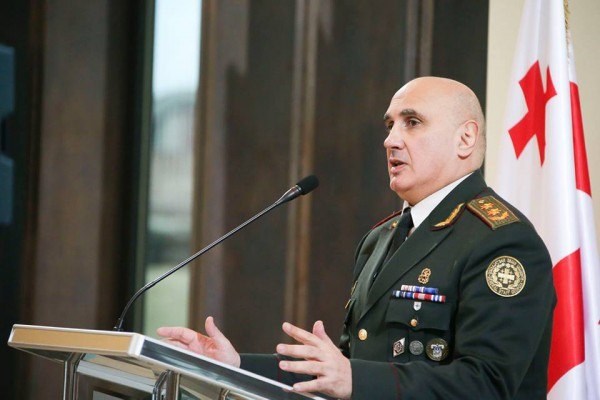
Recent personnel changes within Ukraine's Armed Forces and Ministry of Defence, the operational situation on the front line, and Ukraine's increasingly effective naval drone campaign in the Black Sea were among the key issues discussed by Major General Vakhtang Kapanadze, former Chief of the Georgian General Staff, in an interview with Front News. The military expert also assessed the leadership reshuffle within Ukraine's military and political establishment, the prospects of disrupting Russia's logistics network, and the Kremlin's likely next moves.
Q: Major General Ihor Skybiuk has been appointed Chief of the General Staff of the Armed Forces of Ukraine. What does this appointment indicate, and what qualitative changes should we expect in terms of battlefield command and operational planning?
Vakhtang Kapanadze: Naturally, certain changes are inevitable whenever a new commander takes over. A new Commander-in-Chief has replaced General Syrskyi, and it is only logical that he will bring his own vision and his own team.
In such cases, it is never just one individual who changes. Entire teams are reshaped, as every commander prefers to work with officers whose capabilities he knows and whom he trusts.
The Chief of the General Staff is primarily responsible for the functioning of the General Staff itself. His duties focus on staff operations, planning and coordination rather than direct battlefield command. At the same time, the new military leadership may introduce a new operational approach or further develop the existing strategy. Therefore, it is entirely possible that the new Chief of the General Staff will bring fresh ideas and improvements to the planning process.
Q: What was the main reason behind the change at the Ministry of Defence? Why was it deemed necessary to remove a minister who was widely regarded as successful? What internal political dynamics are driving these developments in Ukraine, and what impact could they have on the situation at the front?
Vakhtang Kapanadze: At this stage, it remains unclear who will ultimately become Ukraine's new Minister of Defence. The individual currently performing the duties of defence minister serves as the head of the Security Service. Under Ukraine's Constitution, however, the defence minister must be a civilian.
It is therefore uncertain whether he will resign from military service and assume civilian status in order to remain defence minister, whether constitutional amendments will be introduced, or whether an entirely different candidate will eventually be appointed. Nor can we rule out the possibility that former Defence Minister Mykhailo Fedorov could return to the post.
From Tbilisi, it is difficult to determine exactly what is happening in Kyiv. A great deal of unofficial information is circulating behind the scenes, but much of it remains impossible to verify.
As for the reshuffle itself, it stemmed from the deteriorating relationship between Commander-in-Chief Oleksandr Syrskyi and Fedorov. Their working relationship had become dysfunctional and was no longer serving Ukraine's interests. This conflict was not new - it had been building for quite some time. Ultimately, the key question was what decision President Volodymyr Zelenskyy would make.
In my view, the dispute dragged on longer than it should have, although it ultimately concluded in a relatively constructive manner. Syrskyi sent Fedorov a letter apologising for certain remarks he had made and for mistakes in their communication. Fedorov, in turn, expressed his gratitude, while Syrskyi publicly acknowledged Fedorov's contribution to Ukraine.
Syrskyi also formally bid farewell to the Armed Forces, the demonstrations dispersed peacefully, and the situation did not escalate any further. For now, that particular crisis appears to have been resolved.
There is, however, one aspect I strongly disagree with. A Commander-in-Chief should not be dismissed under pressure from public demonstrations. In my opinion, that was not the right way to handle such an appointment.
Q: Why did Fedorov's dismissal trigger such strong public protests?
Vakhtang Kapanadze: He is a relatively young politician with a very strong presence on social media. Owing to the nature of his work, he has built an effective public profile and enjoys considerable support online.
If you looked at the demonstrations, you would have noticed that many participants were young people. That demographic formed the core of his support base.
At the same time, dissatisfaction with Fedorov's dismissal gradually spread within the military as well.
The official reason given for his removal was the failure of the mobilisation system. Fedorov had announced generous financial packages for contract recruits, but the state ultimately proved unable to finance them. There were also disagreements between him and the Armed Forces over defence procurement. The military believed that procurement decisions should primarily be based on the operational requirements identified by the Armed Forces rather than on decisions made solely by the minister.
These and several other issues contributed to the growing tensions between Syrskyi and Fedorov.
That said, both men have made significant contributions to Ukraine's recent military successes and to the evolution of its wartime strategy.
Major General Mykhailo Drapatyi has now been appointed Commander-in-Chief of the Armed Forces of Ukraine, replacing Oleksandr Syrskyi. He is a highly experienced officer who previously served as Deputy Chief of the General Staff.
The key priority now is to give him the freedom to implement the reforms he considers necessary for the Armed Forces, without political interference from the government. So far, the initial steps appear both understandable and appropriate.
Q: Ukraine's Unmanned Systems Forces struck 13 Russian vessels in the Black and Azov Seas within a 48-hour period. How effective is this strategy in disrupting Russia's logistics, and does Moscow currently have any viable means of defending itself against Ukrainian naval drones?
Vakhtang Kapanadze: This reflects Ukraine's strategic and operational thinking. The objective is to systematically undermine Russia's logistics network and ultimately create a logistical collapse.
The Black Sea and the Sea of Azov are particularly important because the Port of Taganrog, located on the Sea of Azov, serves as a key logistics hub. It is connected to one of the principal shipping channels used to transport both commercial cargo and other essential supplies.
Since the Sea of Azov is too shallow for large ocean-going vessels, cargo is transferred there onto smaller ships, which then sail into the Black Sea, where it is reloaded onto larger tankers and cargo vessels.
Following the developments involving Iran, traffic through Astrakhan has declined to some extent. Nevertheless, the Ukrainians have managed to extend their reach there as well, carrying out strikes against several so-called "shadow fleet" vessels operating in the area.
The fact that Russia lacks an effective defence against these attacks is evident in itself - it hardly requires expert confirmation. What was once considered Russia's greatest strategic advantage - its vast territory - has increasingly become one of its main vulnerabilities. It is simply unable to defend such an enormous area, and its air defence systems are insufficient to provide comprehensive coverage.
Ukraine has exploited this weakness remarkably well. Ukrainian forces have consistently managed to identify vulnerabilities - gaps in Russia's defensive network - that allow them to penetrate Russian airspace and maritime defences alike.
Until recently, Ukrainian strikes focused primarily on Russia's oil refining infrastructure. The emphasis is now shifting towards logistics hubs, warehouses and supply networks.
As winter approaches, it cannot be ruled out that Ukrainian strikes will increasingly target Russia's heating and energy infrastructure. Winters in Russia are every bit as harsh as they are in Ukraine.
Within a single week, 13 railway lines were reportedly put out of operation. Since Russia's military logistics rely heavily on its railway network, this represents a significant setback. Moreover, repairing damaged railway bridges is considerably more difficult and time-consuming than restoring ordinary road bridges.
Q: During his meeting with US Secretary of State Marco Rubio, Russian Foreign Minister Sergey Lavrov spoke about adhering to the "Spirit of Anchorage," while reports continue to emerge about a possible new mobilisation campaign in Russia this September. In your assessment, are these diplomatic statements merely an attempt to buy time, or is the Kremlin genuinely looking for a way out of this war of attrition?
Vakhtang Kapanadze: To begin with, it is not entirely clear what exactly is meant by the so-called "Anchorage agreements." No formal agreement was ever signed. Lavrov speaks about the spirit of Anchorage, yet no one really knows what that refers to. There is neither a treaty nor even a memorandum documenting such an understanding.
It is equally clear that Russia is facing growing difficulties. The challenges confronting the country are well known.
Azerbaijani President Ilham Aliyev recently stated that a confidential meeting had taken place in Azerbaijan involving former senior German and Russian officials, during which Russia's future and possible pathways to ending the war were reportedly discussed. No details have been disclosed, but the very fact that Aliyev spoke publicly about such a meeting is noteworthy.
As for reports that President Vladimir Putin may announce mobilisation, I would not necessarily expect a declaration of full-scale mobilisation. However, Russia could introduce what might be described as the highest level of wartime alert.
Such a measure would significantly expand the powers of both Putin and Russia's security apparatus, allowing the authorities to tighten control throughout the country.
If such a wartime regime is introduced, the Kremlin would gain the legal authority to requisition privately owned vehicles, buildings and other assets deemed necessary for the war effort. It would also be empowered to carry out expropriations whenever required for military purposes.
So yes, that possibility certainly exists.
This was precisely one of the concerns repeatedly raised by the Ukrainian side, and one of the criticisms directed at Fedorov. The argument was straightforward: if Russia were to launch a large-scale mobilisation, Ukraine would not be able to counter it with ambitious concepts and futuristic projects alone. Ukraine must also be fully prepared for such a scenario.
Against that backdrop, shortcomings in Ukraine's mobilisation system become a serious issue.
At present, the only publicly stated objective is the deadline Putin has set for Russia's Armed Forces to complete the occupation of Donbas by the end of this year.
That deadline has already been postponed several times, and I have serious doubts that it will be met even by the end of the year.
Putin has repeatedly stated that he is prepared to enter peace negotiations only after Russia has secured full control over Donbas.
In my view, Russia has not yet reached the point where it is prepared to end this war through negotiations.
By Elza Paposhvili
Tags:
Vakhtang Kapanadze